

Understanding NTU Turbidity
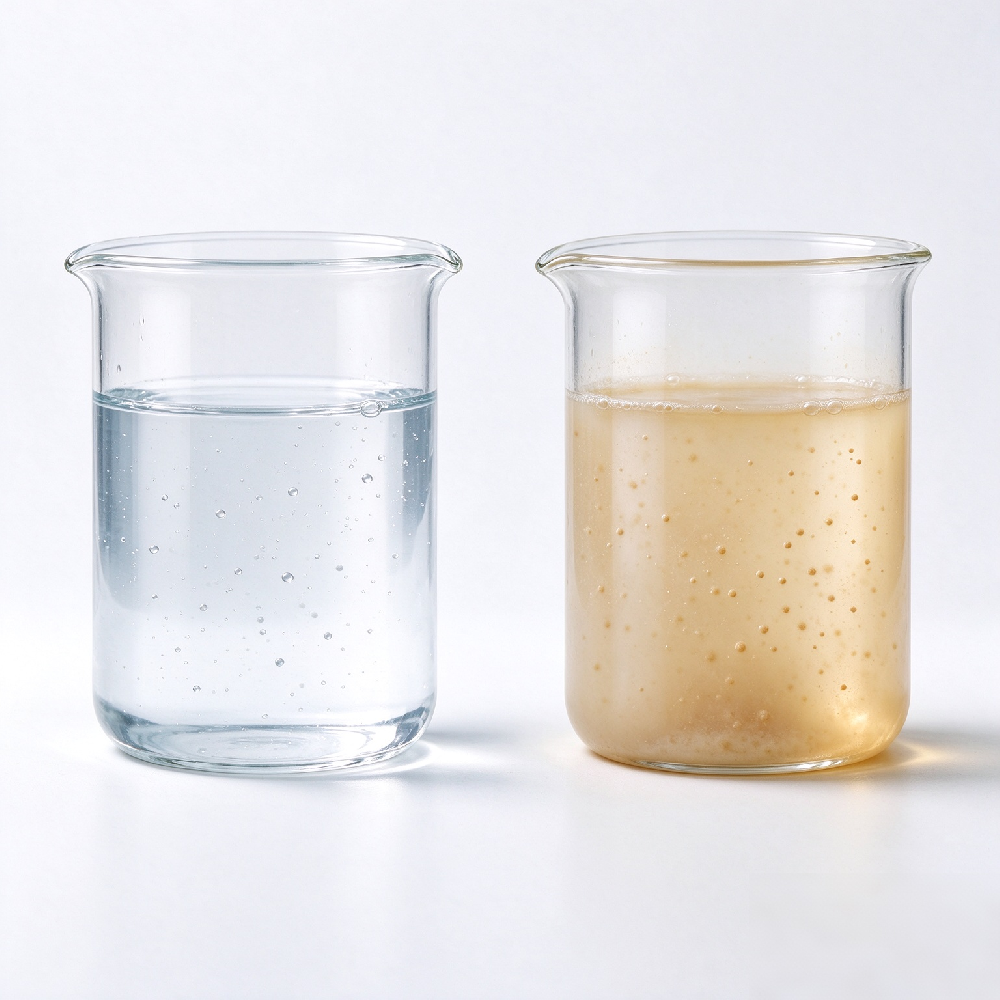
NTU (Nephelometric Turbidity Unit) is the most widely used unit for quantifying turbidity — the cloudiness or haziness of water caused by suspended particles. If you work with drinking water, wastewater, aquaculture, or industrial process water, understanding NTU is essential for compliance, quality control, and process optimization.
In this guide, we explain what NTU means, how it is measured, why it matters, and how to choose the right turbidity sensor for your application.
What Does NTU Stand For?
NTU stands for Nephelometric Turbidity Unit.
The term breaks down as follows:
- Nephelometric — derived from nephelometry, the optical technique of measuring how much light is scattered by particles in a sample.
- Turbidity — the optical property that causes light to be scattered and absorbed rather than transmitted straight through water.
- Unit — the standard measure used to express the result.
In short, NTU measures the scattering of light caused by suspended solids in water. The more particles present, the more light is scattered, and the higher the turbidity reading.
How Is Turbidity Measured in NTU?
Turbidity is measured using an instrument called a turbidimeter (or turbidity sensor), which applies the principle of nephelometry.
The Measurement Principle
Here is how a typical NTU measurement works step by step:
1. A light source — usually an LED or a white tungsten lamp — emits a collimated beam of light through the water sample.
2. Suspended particles in the water scatter the light in all directions.
3. A photodetector is positioned at 90° to the incoming light beam to capture the scattered light.
4. The detector converts the intensity of scattered light into an electrical signal.
5. The instrument compares that signal against a calibration curve created with formazin standard solutions, and displays the result in NTU.
The Role of Formazin Standards
Formazin is the international reference standard for turbidity. By calibrating a turbidimeter with formazin solutions of known concentration, the instrument produces readings that are reproducible across different devices and laboratories. This traceability is what makes NTU a reliable, comparable unit.
NTU vs. Other Turbidity Units
Turbidity can be expressed in several units depending on the method used. The two most common are:
| Unit | Meaning | Measurement Method |
|---|---|---|
| NTU | Nephelometric Turbidity Unit | 90° nephelometry with white light (e.g., EPA 180.1) |
| FNU | Formazin Nephelometric Unit | 90° nephelometry with infrared light (e.g., ISO 7027) |
| FTU | Formazin Turbidity Unit | General formazin-based scale |
| JTU | Jackson Turbidity Unit | Visual/absorbance method (older, less common) |
In most practical cases, NTU and FNU are numerically comparable, so readings from instruments using either standard are broadly interchangeable for regulatory and monitoring purposes. Many modern sensors are designed to meet the ISO 7027 international standard, which specifies the 90° infrared scattering method, ensuring consistent, cross-comparable results.
Why Is NTU Important?
Turbidity is a simple yet powerful water quality indicator. Here is why it matters across different sectors:
1. Drinking Water Safety
High turbidity can shield pathogens from disinfection, making chlorine or UV treatment less effective. Many regulations require treated drinking water to remain below a set NTU threshold — commonly ≤ 0.3 NTU at 95% of samples under US EPA guidelines.
2. Wastewater Treatment
Turbidity is used to monitor the efficiency of sedimentation, filtration, and clarifier processes. A sudden rise in NTU often signals a process upset, such as sludge carryover or filter breakthrough.
3. Environmental and Surface Water Monitoring
Rivers, lakes, and reservoirs are monitored for turbidity because elevated levels can indicate runoff, erosion, algal blooms, or pollution. High turbidity also reduces light penetration, harming aquatic ecosystems.
4. Aquaculture
Fish and shrimp farms rely on turbidity to maintain optimal water conditions. Excessively high or low turbidity can stress stock and reduce growth.
5. Industrial Process Water
In food, beverage, pharmaceutical, and electronics manufacturing, turbidity control ensures product quality and protects downstream equipment like membranes and boilers.
Factors That Affect NTU Readings
It is important to understand that NTU measures optical scattering, not the actual mass of solids. Several factors can influence readings:
- Particle size — Smaller particles scatter light differently than larger ones.
- Particle shape and color — Dark particles absorb light, while light-colored particles scatter more.
- Refractive index — Differences between particles and water affect scattering intensity.
- Sample color — Dissolved color can absorb light and reduce the apparent turbidity.
- Air bubbles — Bubbles scatter light and can inflate readings.
- Ambient light — External light leaking into the measurement chamber can distort results.
This is why turbidity is considered an indicator of water clarity rather than a direct measure of suspended solids concentration.
How to Choose the Right Turbidity Range
Turbidity applications span a wide range of values:
| Application | Typical Range (NTU) |
|---|---|
| Treated drinking water | 0.1 – 1.0 |
| Surface water | 1 – 50 |
| Wastewater / process water | 50 – 1000+ |
| High-turbidity effluents | 1000 – 4000+ |
Choosing a sensor with an appropriate range and resolution ensures accurate, repeatable readings for your specific use case.
Common FAQs About NTU
Is a higher or lower NTU better?
Lower NTU is generally better for water quality, as it indicates fewer suspended particles and clearer water.
What is the difference between NTU and ppm?
NTU measures light scattering (clarity), while ppm (mg/L) measures the concentration of suspended solids by mass. The two are related but not directly convertible, because particle properties vary.
Can I convert NTU to suspended solids?
Not directly. Turbidity depends on particle size, shape, and color, so a fixed conversion factor is unreliable unless you calibrate it for your specific water source.
Why does my sensor need regular calibration?
Optical windows can accumulate fouling, and sensor response can drift over time. Regular calibration with formazin standards — using 0-point, 1-point, or 2-point routines — keeps NTU readings accurate and traceable.
Conclusion
NTU (Nephelometric Turbidity Unit) is the standard measure of water turbidity, based on the scattering of light at a 90° angle. It is a fast, inexpensive, and widely accepted indicator of water clarity used across drinking water, wastewater, environmental monitoring, and industry.
Whether you are ensuring regulatory compliance, optimizing a treatment process, or maintaining water quality in aquaculture, understanding how NTU is measured — and what it can and cannot tell you — is the first step to reliable turbidity control.
Looking to monitor turbidity in your application? Choose a sensor with the right range and features — whether a compact online unit like Yosemitech's self-cleaning model for dirty water, or a low-range sensor for ultra-clear monitoring. Calibrate it with formazin standards, match your measurement range to your process, and verify that your method aligns with your regulatory requirements. Feel free to contact our sales team!